
If another driver hits you and takes off, one of the first questions you may have is how long do you have to report a hit and run in Nevada? The safest answer is simple: report the crash as soon as possible.
A hit-and-run can leave you with very little information and a lot to figure out. You may not have the other driver’s name, insurance information, or even a complete license plate number. Meanwhile, you could be dealing with vehicle damage, injuries, medical appointments, and questions about whether your own insurance will cover the accident.
Reporting the crash quickly can help create an official record of what happened and give law enforcement a better opportunity to identify the driver. It may also become important when you make an insurance claim, particularly if the other driver is never found.
Below, we’ll break down Nevada’s hit-and-run reporting requirements, what to do after the crash, and the different deadlines that may affect your ability to seek compensation.
Table of Contents
How Long Do You Have to Report a Hit-and-Run in Nevada?
If you are involved in a hit-and-run in Nevada, you should report the crash to law enforcement as soon as possible.
Under NRS 484E.030, when a crash results in injury or death, or occurs on a highway, and no police officer is present, the driver is required to report the crash “forthwith” to the nearest police authority or the Nevada Highway Patrol. In practical terms, you should not wait days to report a hit-and-run. Contact law enforcement from the scene when it is safe and possible to do so.
Nevada law also establishes a separate reporting requirement for certain crashes. Under NRS 484E.070, a driver involved in a crash that results in bodily injury, death, or apparent property damage of $750 or more generally must submit a written or electronic crash report to the Department within 10 days of the crash. However, this separate report may not be required if a police officer investigated the crash and the officer’s report contains the required insurance information.
These are two different requirements. The 10-day deadline should not be treated as permission to wait 10 days before contacting law enforcement after a hit-and-run. Reporting the crash promptly can also help document what happened while witnesses, surveillance footage, vehicle descriptions, and other evidence may still be available.
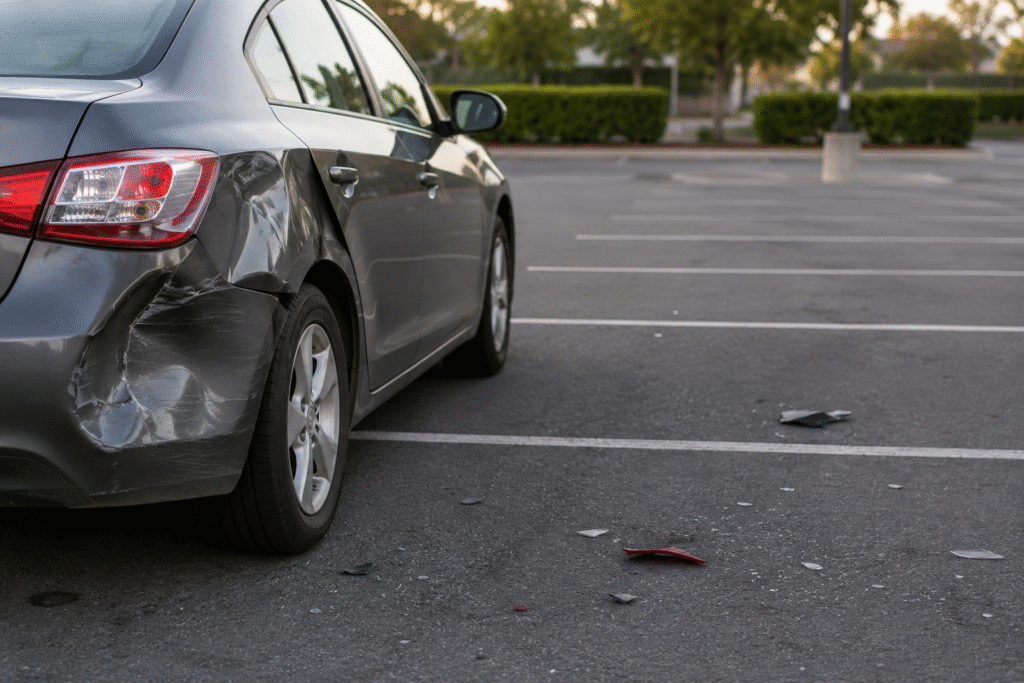
What Counts as a Hit-and-Run in Nevada?
A hit and run generally happens when a driver is involved in a crash and leaves without stopping or providing the information required by Nevada law.
Under NRS 484E.010, drivers involved in crashes resulting in injury or death must stop at the scene and remain there while completing certain legal requirements, including exchanging information and providing reasonable assistance when someone is injured.
Nevada law also considers property damage. Under NRS 484E.040, a driver who hits an unattended vehicle must stop and either find the owner or leave a written notice with their name and address. Additional reporting requirements may also apply depending on where and how the crash occurred.
In short, a hit and run can involve an injury, another occupied vehicle, or even a parked car.
What Should You Do Immediately After a Hit-and-Run?
After a hit and run, focus on your safety and gathering as much information as possible.
- Get somewhere safe. Move out of traffic if you can do so safely and check yourself and your passengers for injuries.
- Call 911 and report the crash. Tell law enforcement that the other driver left the scene and share any details you remember.
- Get medical attention if needed. Some injuries may not be immediately noticeable after a crash.
- Take photos. Document your vehicle damage, the crash scene, debris, skid marks, and the surrounding area.
- Write down what you remember. Note the vehicle’s color, make, model, license plate information, damage, and direction of travel.
- Look for witnesses and cameras. Get witness contact information and check nearby businesses, homes, or intersections for potential surveillance footage.
- Notify your insurance company. Report the crash promptly and review your policy for any specific notice requirements.
What If You Didn’t Report the Hit-and-Run Right Away?
If some time has already passed, don’t assume it is too late to take action. When asking how long do you have to report a hit and run, remember that reporting requirements and insurance deadlines are not necessarily the same thing.
Report the crash to law enforcement as soon as possible and document any information you still have, including photos, witness information, vehicle details, or nearby cameras that may have captured the crash.
You should also review your insurance policy and notify your insurer promptly. A delayed report may make a claim more complicated, but it does not automatically mean you are out of options.
How Does a Hit-and-Run Affect Your Insurance Claim?
When the driver who caused a crash leaves the scene, you may have to turn to your own insurance coverage for help. What is available depends on your policy and the circumstances of the crash.
Depending on your coverage, this may include:
- Uninsured/underinsured motorist (UM/UIM) coverage: May help cover injuries when the at-fault driver cannot be identified or does not have enough insurance.
- Collision coverage: May help pay for damage to your vehicle, regardless of who caused the crash.
- Medical payments (MedPay) coverage: May help with medical expenses after a crash, regardless of fault.
Insurance policies can have different requirements for reporting a hit-and-run and filing a claim. Review your policy and notify your insurer promptly to understand what coverage may be available.
What If the Hit-and-Run Driver Is Never Found?
Not every hit and run driver is identified. If the driver is never found, you may still have options through your own insurance policy.
Depending on your coverage, uninsured motorist coverage may apply to injuries caused by an unidentified driver. Collision coverage may help with vehicle damage, while MedPay may help with medical expenses.
This is also one reason how long do you have to report a hit and run matters. Promptly reporting the crash can create documentation of the incident and may help support an insurance claim when the other driver cannot be identified.
Coverage varies by policy, so review your insurance documents carefully to understand what may apply to your situation.
How Long Do You Have to File an Injury Claim After a Hit-and-Run in Nevada?
Reporting a hit-and-run and filing a lawsuit are two different deadlines.
Under NRS 11.190, a person generally has two years to bring a lawsuit for injuries caused by another person’s wrongful act or negligence. Claims involving damage to personal property generally have a three-year limitation period.
However, waiting can make a hit-and-run case more difficult. Surveillance footage may be deleted, witnesses can become harder to locate, and other evidence may disappear.
The deadline that applies can depend on the circumstances of your case. If you’re unsure which deadline applies after a Nevada hit-and-run, reach out to Hale Injury Law. We can help you understand your options and the deadlines that may apply to your situation.
Can Police Find a Hit-and-Run Driver After They Leave?
In some cases. Even if the driver leaves the scene, law enforcement may be able to use available evidence to help identify the vehicle or driver.
Helpful evidence may include:
- Witness statements
- Surveillance or traffic camera footage
- Dashcam recordings
- Full or partial license plate information
- Vehicle make, model, color, or damage
- Debris left at the scene
This is another reason to report a hit and run promptly. Evidence like surveillance footage can disappear quickly, so gathering and preserving information early can make a difference.

Hit and Run Accidents in Las Vegas
Las Vegas presents some unique challenges after a hit and run. Heavy traffic, busy intersections, parking lots, and major corridors like I-15 and I-215 can make it difficult to identify a driver who leaves the scene.
Crashes around the Las Vegas Strip and Paradise may also involve tourists or rental vehicles, adding another layer to identifying the driver and determining available insurance coverage.
If a hit and run happens in a busy area, nearby hotels, casinos, businesses, homes, or other vehicles may have surveillance or dashcam footage. Acting quickly can help preserve evidence that may otherwise be lost.
When Should You Contact a Nevada Hit and Run Lawyer?
You do not have to wait until an insurance claim becomes complicated to speak with a lawyer. After a hit and run, getting help early may make it easier to preserve evidence and understand what insurance coverage may be available.
Surveillance footage can be overwritten, witnesses can become harder to locate, and insurance questions can arise when the at-fault driver cannot be identified.
If you were injured in a Nevada hit and run and are unsure what to do next, Hale Injury Law can help you understand your options and the next steps in your claim.
Frequently Asked Questions About Nevada Hit-and-Run Accidents
How long do you have to report a hit-and-run in Nevada?
Nevada law requires certain crashes to be reported to law enforcement “forthwith,” meaning without unnecessary delay. A separate 10-day reporting requirement may apply in certain circumstances. It is best to report a hit-and-run as soon as possible.
Should I call 911 after a hit and run?
Yes. If another driver leaves the scene of a crash, contact law enforcement and report what happened. If anyone is injured or there is an immediate safety concern, call 911.
What happens if I report a hit and run late?
A delayed report does not necessarily mean you have no options. However, waiting can make it more difficult to locate witnesses, preserve footage, document the crash, or meet insurance requirements.
Will insurance cover a hit and run in Nevada?
It may. Coverage depends on your insurance policy and the circumstances of the crash. UM/UIM, collision, or MedPay coverage may apply in some situations.
What if I didn’t get the other driver’s license plate?
You should still report the crash. If you have details such as the vehicle’s make, model, color, damage, direction of travel, witness statements, or surveillance footage this may help identify the driver.
What happens if police never find the hit and run driver?
You may still have options through your own insurance coverage. What is available will depend on your policy and the circumstances of the crash.
Can I file a claim if I was injured in a hit and run?
Potentially. Even if the other driver is not identified, your own insurance coverage may provide options for seeking compensation after an injury.
Does uninsured motorist coverage apply to hit and run accidents in Nevada?
It may. Uninsured motorist coverage can apply in some crashes involving an unidentified driver, but coverage depends on the terms of your policy and the facts of the accident.

Talk to Hale Injury Law After a Nevada Hit-and-Run
A hit and run can leave you with questions about insurance, medical bills, and what to do next. You don’t have to figure it out alone.
If you were injured in a hit-and-run in Nevada, contact Hale Injury Law for a free consultation. We can help you understand your options and determine the next steps for your claim.