
Winter has a way of catching people off guard. One moment the roads seem manageable, and the next, icy conditions, reduced visibility, or sudden storms turn routine travel into a real safety risk. Staying informed about essential winter driving tips can help drivers everywhere stay prepared, no matter where the road leads.
Even in states like Nevada and Arizona, where winter weather is often mild, conditions can change quickly — especially when traveling to higher elevations or out-of-state destinations. Keeping smart driving tips in mind and preparing for unpredictable driving travel weather can help reduce your risk year-round. And if the unexpected does happen, having a trusted advocate in your corner can make all the difference.
Below are some of the most common winter accidents, and practical ways to avoid them, so you can focus on getting where you’re going safely, and let Hale Injury Law handle the rest if things don’t go as planned.
1. Slip and Fall Accidents on Ice
Winter isn’t just dangerous on the road. Icy sidewalks, parking lots, driveways, and entryways can lead to serious slip-and-fall injuries, especially early in the morning or after overnight freezing.
How to reduce the risk:
- Wear shoes with good traction
- Walk slowly and take shorter steps
- Use handrails whenever possible
- Be cautious stepping out of vehicles or off curbs
- Clear walkways and use salt or sand when needed

2. Rear-End and Intersection Car Accidents
Winter driving dramatically increases stopping distance. Following essential winter driving tips, like leaving extra space and braking early, can help prevent rear-end collisions and intersection crashes on slick roads.
Smart car tips for winter driving:
- Slow down, even if you’re under the speed limit
- Increase following distance
- Begin braking well before intersections
- Avoid sudden acceleration or hard stops
- Make sure headlights and windshield wipers are working properly
Winter roads demand patience and extra awareness. By consistently applying essential winter driving tips, drivers can reduce sudden stops, improve reaction time, and help prevent common winter collisions before they happen.
3. Spinouts and Loss of Vehicle Control
Ice, slush, and wet pavement can cause vehicles to lose traction unexpectedly, leading to spinouts or single-vehicle crashes. Bridges, ramps, and shaded areas freeze first and deserve extra caution.
How to drive on ice safely:
- Reduce speed and avoid sharp turns
- Don’t overcorrect if you start sliding, steer gently in the direction of the skid
- Avoid slamming on the brakes
- Use steady, controlled steering inputs
- Stay alert for other drivers who may lose control
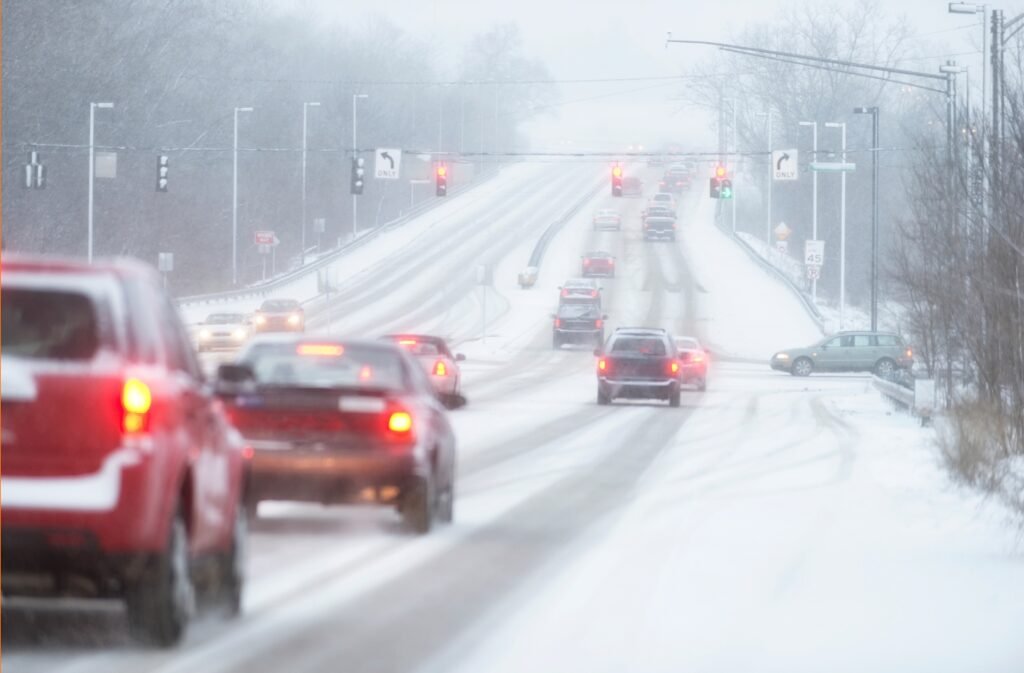
Spinouts can feel sudden and unsettling, but staying calm and responding intentionally makes a real difference. Gentle steering, gradual braking, and reduced speed help your tires regain traction and keep your vehicle pointed where you want it to go. As important as vehicle control is, winter driving safety also depends on being able to see, and be seen, when conditions start to change.
4. Visibility-Related Accidents
Snow, rain, fog, dust, and even glare from wet roads can severely limit visibility. Poor visibility often leads to rear-end crashes, lane-departure accidents, and missed hazards.
Driving tips for low visibility:
- Fully clear all windows and mirrors before driving
- Use windshield wipers and defrosters properly
- Turn on headlights during rain, fog, or snow
- Pull over safely if visibility becomes too dangerous
When visibility drops, reaction time shortens and mistakes become easier to make. Taking a few extra moments to clear your windows, use your lights correctly, and slow down when conditions worsen can dramatically reduce risk. If the road ahead becomes difficult to see, choosing to pull over and wait it out is often the safest decision you can make.
5. Carbon Monoxide & Cold-Weather Risks
While less obvious, winter brings indoor safety risks too. Improper heating or blocked ventilation can lead to carbon monoxide exposure.
Preventive steps:
- Maintain heating systems annually
- Never run vehicles or generators in enclosed spaces
- Install carbon monoxide detectors on every level of your home
Build a Winter Car Kit Before You Need It
Keeping a well-stocked winter car kit is one of the smartest winter driving tips, especially if you’re stranded or delayed during winter travel — even in regions where storms are rare.
Consider keeping:
- Blankets or warm clothing
- Flashlight and extra batteries
- Phone charger or power bank
- Water and non-perishable snacks
- Ice scraper and basic tools
- First-aid supplies
Preparation is one of the most effective winter driving tips drivers can follow. Having the right supplies on hand helps turn unexpected delays into manageable moments, giving you warmth, visibility, and peace of mind until help arrives or conditions improve.
Winter Safety Matters, No Matter Where You Live
While snow and ice may be rare in parts of Nevada and Arizona, winter travel often means driving through changing climates, higher elevations, or unfamiliar weather patterns. Staying aware of icy conditions, adjusting your driving habits, and preparing ahead of time can help prevent accidents before they happen.
Winter accidents are often preventable, and a little preparation goes a long way. Keeping key winter driving tips in mind allows drivers to approach changing conditions with awareness, patience, and confidence.
Stay safe, stay prepared, and take winter one mile at a time. And if a winter accident does happen, Hale Injury Law is here to protect your rights, guide you through the next steps, and help you move forward with confidence.
Frequently Asked Questions:
1. What are the most important winter driving tips to follow?
Some of the most important winter driving tips include slowing down, increasing your following distance, braking earlier than usual, and avoiding sudden movements on icy or wet roads. Preparing your vehicle, checking weather conditions before travel, and keeping a winter car kit in your vehicle can also significantly reduce your risk during winter driving.
2. How should you drive on ice or in icy conditions?
Knowing how to drive on ice starts with staying calm and controlled. Reduce your speed, avoid hard braking, and steer gently if your vehicle begins to slide. One of the most effective winter driving tips is to anticipate stops early and give yourself extra time to react when driving in icy conditions.
3. Do winter driving tips still apply in warm states like Nevada or Arizona?
Yes. While winter weather may be milder in warm states, winter driving tips are still important when traveling to higher elevations, driving during storms, or heading out of state. Weather can change quickly, and being prepared for icy conditions, reduced visibility, or unexpected delays helps keep drivers safe no matter where they live.