
Determining who is at fault in a T-bone accident depends on which driver had the right of way and what happened immediately before the collision.
One driver may have run a red light or stop sign, failed to yield while turning, or entered an intersection when another vehicle already had the right of way. But the location of the damage alone does not establish liability.
When drivers give conflicting accounts, having an experienced personal injury attorney investigate the evidence can be especially important.
Table of Contents
Who Is at Fault in a T-Bone Accident Under Nevada Law?
There is no single Nevada rule that makes one driver automatically responsible for every T-bone collision.
Instead, the applicable right-of-way rule depends on the intersection.
Under NRS 484B.250, a driver approaching an uncontrolled intersection generally must yield to a vehicle that has already entered from another highway. If two vehicles arrive at approximately the same time, the driver on the left generally yields to the vehicle on the right.
Different rules apply when the intersection has traffic signals, stop signs or yield signs.
What If One Driver Ran a Red Light?
A red-light violation can be significant evidence of fault.
Under NRS 484B.307, a driver facing a steady red signal generally must stop and remain stopped until permitted to proceed, subject to Nevada’s rules for lawful turns on red.
The harder issue may be proving which driver had which signal.
When both drivers claim they had a green light, witnesses, dashcam footage, nearby surveillance video and other evidence may become important.
This is exactly the kind of liability dispute where having an experienced personal injury attorney on your side can matter. An attorney can investigate the evidence rather than allowing the claim to depend entirely on competing driver statements.
What If Someone Ran a Stop Sign?
Nevada also has specific rules for stop- and yield-controlled intersections.
Under NRS 484B.257, a driver facing a stop sign must stop and yield to vehicles already within the intersection or approaching closely enough to create an immediate hazard.
If a driver enters despite approaching traffic and a side-impact collision follows, that failure to yield can become important to the liability analysis.
What About a T-Bone Crash Involving a Left Turn?
Left-turn crashes have another right-of-way rule.
Nevada’s NRS 484B.253 generally requires a driver turning left to yield to oncoming traffic that is already in the intersection or close enough to constitute an immediate hazard.
That does not mean the turning driver is automatically responsible for every resulting collision. The actions of the approaching driver and the traffic signals can also matter.
Can Both Drivers Be at Fault?
Potentially.
Nevada uses a modified comparative-negligence system. Under NRS 41.141, an injured person’s negligence does not bar recovery when it is not greater than the negligence of the party or combined parties from whom recovery is sought. When recovery is allowed, damages are reduced according to the injured person’s share of negligence.
That can matter when one driver failed to yield but the other driver is also accused of speeding or otherwise contributing to the crash.
When shared fault is seriously disputed, an experienced personal injury attorney can evaluate the entire collision rather than relying on a simplified assumption about which vehicle struck the other.
What Evidence Can Help Determine Fault?
Useful evidence may include:
- traffic-camera, surveillance or dashcam footage;
- witness accounts;
- photographs of the intersection and vehicles;
- traffic lights, signs and lane markings;
- vehicle resting positions and damage;
- police observations and reports; and
- other evidence showing the movements of each vehicle.
Hale’s guide to what to do after a car accident in Las Vegas explains the broader importance of documenting a collision before evidence disappears.
If the other driver gives a different account of the crash, Hale also has a dedicated guide explaining what to do when the other driver says you were at fault.
Why Are Intersection Crashes Important in Nevada?
Intersection collisions remain a significant Nevada traffic-safety issue.
Nevada’s Zero Fatalities intersection program reports 573 intersection-related fatalities and 542 fatal intersection crashes on Nevada roads from 2019 through 2023.
The state’s traffic-safety data also reports that 91% of fatal intersection crashes during that period occurred on urban roads, with Clark County recording the largest number.
That makes intersection liability particularly relevant for drivers throughout Las Vegas and Henderson.
Why Can a T-Bone Accident Claim Become Complicated?
Because who is at fault in a T-bone accident often depends on what happened seconds before impact.
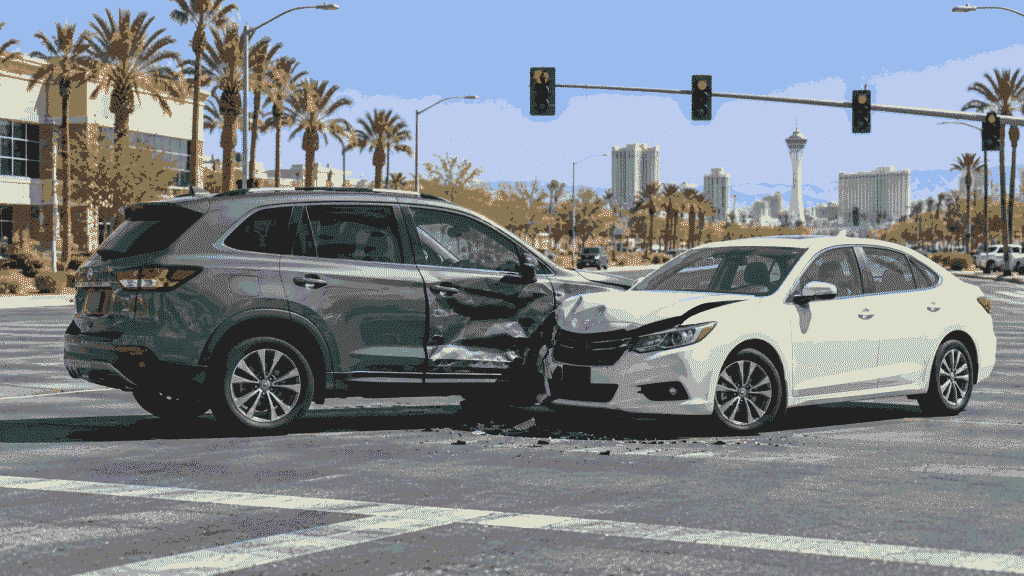
The vehicle damage may show where the collision occurred, but not necessarily which driver had the right of way. Signals, turns, speed and shared fault may all become disputed.
When injuries are significant or the evidence is contested, an experienced personal injury attorney can investigate the collision and evaluate Nevada’s right-of-way and comparative-negligence rules together.
If you were injured in a T-bone accident in Las Vegas, Henderson or elsewhere in Southern Nevada, Hale Injury Law can help you understand your options.
Every accident is different. This information is for general educational purposes and is not legal advice. Past results do not guarantee a similar outcome.
Frequently Asked Questions
Who is at fault in a T-bone accident in Nevada?
Fault depends on which driver had the right of way and the circumstances leading to the crash. Traffic signals, stop signs, turning movements and other evidence may all matter.
Is the driver who hits the side of another car automatically at fault?
No. The point of impact alone does not establish which driver violated the applicable right-of-way rule.
What if both drivers say they had a green light?
That creates an evidence dispute. Video, independent witnesses, police observations and other evidence may help establish what happened.
Can both drivers share fault?
Yes, when the evidence supports negligence by both drivers. Nevada’s comparative-negligence statute governs how shared fault can affect recovery.
